
A View From Underneath
I Was a Bad Bad Girl
After driving all the way to Marin to see a rheumatologist for a specialized nailfold capillaroscopy exam, I left feeling incredibly discouraged. She barely heard me. She barely examined me. She would not prescribe the medication that I, as a medical provider, know I need.
Dismissed Again
If it is this hard for someone with my background to get answers, I can only imagine what it is like for everyone else. Please always ask for a second opinion if something does not feel right. I came to that appointment with a detailed family history graph and supporting research documents showing exactly why Plaquenil could help with my clinical picture, and I was still dismissed. She told me there was a high chance it was fibromyalgia, offered therapy and physical therapy, and said that was all she could offer.
When I wake up daily feeling hungover, or maybe pregnant, but since I only know hangovers let us go with that, with freezing hands and feet, hands swollen like sausages, joint pain and stiffness, that is not fibromyalgia.
Whoops
I am embarrassed to admit that I raised my voice at her. I am mortified, and I am sharing it here because that is the place I arrived at after being dismissed for over a year by the specialists who are supposed to have answers and do not. This is all conjecture on my part, but after trying to look clearly at the picture for the last year, I think the systems are not disseminating information downward, and I still cannot fully wrap my head around why rheumatologists are not talking to each other or recognizing the full breadth of their own specialty. There are specialty rheumatological clinics that specialize in seronegative autoimmune conditions. The general rheumatologists I have seen do not appear to recognize the symptom clusters, do not refer to those specialty clinics, and unless your labs are obviously positive, they are going to send you home without treatment and make you feel like it is in your head more than in your body. If anyone has insight into why that is, I would genuinely love to understand it.
None of that excuses what happened in that appointment, but it does partially explain it. I did not ask that rheumatologist her burnout score, but based on her behavior and her dismissive condescending tone, I would guess somewhere around a twelve. Providers go into medicine to help others. When you layer on years of working in broken systems set up to force people to work harder and faster while dealing with the complexities and trauma of other human beings, it most often leads to emotional exhaustion and compassion fatigue. That is where she appeared to be.
I told her tearfully that I really needed something to help me because I was having a hard time getting back to normal work hours after a year. That I spend more time on a heating blanket and ice packs than having much of a social life at 52. That just taking care of daily life wears me out. That if she did not want to prescribe the medication, could she please refer me to Stanford's seronegative autoimmune clinic.
Her answer was that they do not refer outside of Kaiser when they have the treatment and doctors you need within Kaiser.
They do, huh.
She could not hear me. She seemed to care less. She sure seemed like she could use some trauma work, some nature, and a vacation.
Seeking More Answers
I apologized for raising my voice. I had walked out saying I would have to prescribe the medication for myself. Once I calmed down I realized that going it alone without supervision was not the right call, so I keep at it, I will get to Stanford.
When you are autoimmune, you are told to rest more, sleep more, eat better. Then the systems around you take up every ounce of energy and make it impossible to do any of those things. You spend what little you have getting labs, trying to diagnose yourself, going to appointments that lead nowhere. To then be dismissed by someone who had made up their mind before you walked in the room. It forces you to do all the research yourself with the spare pennies of energy you have left, just to get to the place you needed to be from the beginning. Maddening.
I am sharing all of this so others know they are not alone and know how to proceed. To understand how I got here and why I am so determined not to stay here, you need to know a little bit about who I am. Let me start with a bright spot. Let me tell you about the wave I caught.
I Caught a Wave
The executive order came through putting $50 million towards psychedelic research and looking at fast tracking medications and it found me ready. Fifteen months of training already behind me, including a year-long trauma and psychedelic practitioner program, a 16-hour Hakomi and Somatics course, a 6-hour suicide intervention course, a psilocybin retreat in Oregon, volunteering, and assisting friends in local ceremonies. Plus enough podcasts and YouTube hours to make any self-taught person like my dad proud. A website was built, Healing the Helpers, my new trauma informed business, imagined and birthed. All of it already done, already in my body and soul, before it was officially sanctioned, before the promised funding, before the culture is, God willing, about to shift. Sometimes you plant seeds without knowing the rain is coming. That is what happened here.
When the executive order came, I thought I caught a wave. My dad was always just about to stand up on those waves. We shall see how this wave pans out. I bet Rick Doblin at Maps (Multidisciplinary Association for Psychedelic Studies) who has been working on legalization for 40 years is grinning from ear to ear.
I am not going to lie, I am nervous about whether this will be done right. Our government has a complicated track record with exactly this kind of thing, as we saw in the opiate crisis and the horrible debacle that turned out to be. Then I thought about the indigenous communities who would now be part of the conversation. The people who have held this knowledge for millennia. They are not going to let it be done wrong. Neither are the practitioners who have been doing this work underground for years, at personal and legal risk, because they believed in it so strongly. Neither am I, nor the rest of the medical people and therapists I am in conversations with.
The wave is here. The timing is not an accident. I have been building toward this, one class and one conversation at a time, from a heating blanket, with my four furry beasts and a cat with cancer on my lap, while in the middle of fighting for my own health diagnosis. I am ready!
That is the grace in all of this. Even in the hardest year of my health, I was exactly where I was supposed to be.
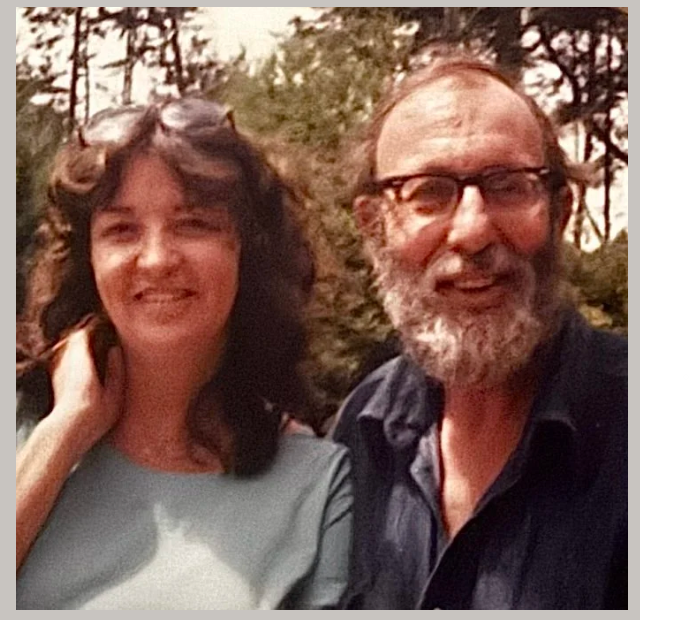
My parents had their fair share of fun in the seventies and would deeply appreciate the personal trauma work I have done with the inheritance they left me. They would be proud it went toward my own healing first. You cannot pour from an empty cup. I had to regrow my capacity from the inside out so that one day I could help other people do the same.
This post is in honor of my mom, Susan Adelman. A dedicated nurse for most of her life and always a helper.
To my father Gordon, whose foresight, faith, and very good taste in investments made all of this possible. This allowed me to go back to school and build something worth building, Healing the Helpers. What can I say, dad, you were always ahead of your time.
If you are short on time, take the free burnout quiz and find out what your current capacity is today. What is your capacity to show up for work and for yourself right now? There are also free handouts at the end to help you balance your nervous system. I made them for you.
👉 Take the free burnout quiz here Burnout Quiz
If you have time, stay with me.
Groundhog Day
I have been spending time in a few online autoimmune support groups lately. What I keep seeing, over and over, is women sharing that they have been made to feel that they are crazy. That their symptoms do not matter. That nothing is wrong. Women who are being knocked flat by autoimmune flares on a regular basis and still cannot get anyone to listen. I kept reading as I was thinking, I know exactly how that feels. So I thought, I will continue to share my journey so that maybe it helps someone find the words they need for their next appointment, or at least helps them feel less alone.
Welp. In many ways it truly feels like Groundhog Day. I feel like I have gotten nowhere, but when I look back, I have actually made it somewhere in this gauntlet of medical systems and appointments. When I started this journey I did not know how long the gauntlet was going to be. I am still here. Still fighting. Still trying to get my autoimmune disease properly diagnosed and treated. I thought I was going to get to see the seronegative autoimmune team at Columbia University, they accepted my case with a self referral, but they do not do telemedicine across state lines, and right now I am not well enough to travel to New York. So I am waiting to get into Stanford's seronegative clinic. However, Stanford will not accept a self-referral, trust me, I tried, and my Kaiser rheumatologists are refusing to refer me. They swear they have everything to offer me within Kaiser walls and the standard line from the Rheumatology department is they do not refer out when it is not a covered benefit under the plan and they have everything I need within Kaiser walls. I would say they are categorically wrong about having everything I need, as they have offered no diagnosis and no treatment plan for my body that has been going haywire for the last 16 months. That is where things stand. Still fighting.
Here is why I keep talking about it.
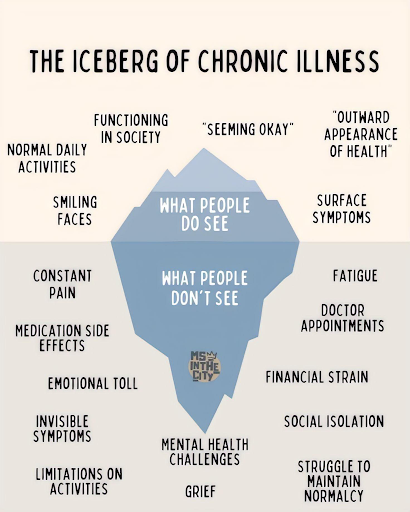
I cannot stomach the idea that while I am navigating all of this, there are thousands of women out there being dismissed and made to feel as if they are crazy, the same way my mother was for decades. Nobody ever looked my mother in the eye and said those words. It was subtler than that. It was in the way her concerns were minimized. The way she was sent home without answers, again and again. The way the conversation ended before she felt heard. She left those appointments feeling like her age, her weight, her hormones, and maybe her head were the explanation for everything, and that nothing more needed to be done. That is how dismissal works. It does not always announce itself. It happens when labs come back normal and that is declared the end of the conversation, despite how ones body feels. It is so frustrating to be sent home without a diagnosis, without a treatment plan, without anyone looking underneath the surface of the iceberg when you know, damn well, something is wrong with your body.
I have been made to feel all the versions of that in the last 16 months. It must be your diet. Lose a little bit of weight. Get more sleep. A myriad of other well-intentioned comments that did not get me to a diagnosis or to feeling better. As a physician assistant with 23 years of clinical experience. As someone who showed up with documentation showing her family history of autoimmunity and research on the diagnosis and the right medication. It happened to me anyway.
So this post is in honor of my mom, and it is for every person out there whose body is telling them something is wrong. If your labs keep coming back normal but your body is screaming otherwise, keep reading. There are also some resources and a lab reference guide in my original post on Facebook. You are not alone. You are not crazy.
Take what you need from this. Share what might help someone else. That is the whole point.
PIES
The acronym stands for physical, intellectual, emotional, and spiritual.
When I work with patients in my clinic or clients in my coaching and trauma business, I like to look at all the pieces of the pie. That is how I want to lay out where I am and what I have been going through, because it touches all four areas. Everything is connected in our bodies just as everything in the universe is connected.
The physical is a much longer story so we will save that for further down in this read.
Intellectually I am learning so much so quickly it feels like drinking out of a fire hose and I am loving every minute of it!
Emotionally, I have honestly never been better, despite the chaos. Over the last three years I have done extensive personal trauma work. Originally this was to fill back up a very empty cup after a very stressful time. In doing my own work it became apparent, quickly how profound and life-changing it was, and all I could think was that I must do this work for others.
You could call that my helper wound, but it is also the fact that working in western medicine, there are few things I have seen move the needle so amazingly fast for people.
This is what I wish for you.
No lie, it has been hard. Trauma work makes you glitchy in the middle. There have been some ups and some downs, but the ups are amazing! I have finally learned how to regulate my nervous system for the first time in my life. I can bring myself back from fight, flight, or freeze, out of that sympathetic overdrive and back into parasympathetic, fairly easily now.
I was born premature. It turns out that when you are born premature, you come into the world with a more reactive nervous system and a more vulnerable immune system. Add decades of pushing past physical limits, pushing past what my body was asking for, the compounding stress, menopause and a couple of nasty viruses in a row as triggers and you have my current situation. The family history sure did not help. That is not a medical diagnosis. That is a pattern. Understanding it has been one of the most useful things I have ever done for myself.
Spiritually, this very profound trauma work and medicine work has me feeling a connection to the universe and to something larger than myself that was just a small flame before. For the first time, I do not feel the need to fill that space with as much noise, or distractions. I am no longer filling a god-sized hole with things that do not belong there. That flame has become a real fire. That is not a small thing. I am left with a human size hole and I will take it!
What most people see are the moments I show up with a smile on my face. The days I am able to work. The slow building of this new practice, Healing the Helpers, which is feeding my soul and my spirit in a way that western medicine has not in quite a while. People see the top portion of the iceberg. What most people do not see is what autoimmune disease actually feels like from the inside and all that is going on beneath the surface. I will share more about that soon.
The Medical Model
I want to be clear that I still deeply love my clinic work and the patients I get to serve. That has not changed. What has changed is my relationship with the fifteen-minute medical model, the constant rushed feeling, the sense that I can only ever reach the surface of what is really going on for the patients on my schedule. There is so much more underneath. There always has been. I am just more aware then ever that we need to treat the whole person and all the pieces of the pie to help with wellness. I am also now a firm believer that if you want to heal physically, you must first heal your trauma wounds.
This medical model is also extraordinarily hard on the provider nervous system. Everything from the minute you start until you are done is a mad dash, including eating, using the restroom. This is not good for anyone, including the patients who never quite feel their needs are fully met. The insurance companies, however, seem perfectly fine with things exactly as they are.
Trauma Work in Action-The Bulldog
In helping my mom through her last couple of decades, trying to help her get treatment, get heard, get a diagnosis, she used to call me her bulldog. I would help her with her appointments and fight for what she needed, because she was in miserable pain and nobody was listening. She needed someone who would not take no for an answer.
The hard truth is that I could fight for her more easily than I could originally fight for myself. My own childhood wound, the glass child dynamic, meant that being dismissed by the system felt like confirmation of something I already believed about myself, that I don't matter enough to get what I need.
If you have not heard the term glass child, look it up. It refers to the siblings of ill children, the ones who learn to be invisible because all of the family's attention, energy, and worry goes to the sick child. You become capable. You learn to not need as much. You become self-reliant, because someone else needs more. Coupled with the fact that I was a highly sensitive child, I now understand as an adult that I am a strong empath and an HSP, a highly sensitive person.
As a kid I decided my standard response was I am fine. Well, if you ask one of my heroes, Brene Brown, fine stands for freaked out, insecure, neurotic, and emotional. That sure fits my younger years to a T.
I was sandwiched between a sister who was born premature and more gravely ill than I, and a brother who had leukemia as a child. I became very good at not needing things. I learned to be self-sufficient and FINE.
The trauma work I have done changed that. I allow myself to feel the full range of my emotions. I admit when I am not FINE. I now know the wound when it is being triggered, and I can choose differently. Now I am bulldogging for myself, with the same energy I gave my mother.
So this post is me not being quiet, for my mom Susan, and for all the women out there who are leaving their doctor's appointments feeling dismissed. Being told it is probably just menopause, hormones, stress. Being told to lose a little weight. To come back in a year and check more labs. They said versions of that to me too. The dismissiveness I have experienced from rheumatologists, what my mother experienced, and what I keep hearing from women in online support groups, is not okay.
It has taken me sixteen months to wrap my head around what I think is happening, and keep in mind this is all conjecture.
There is a significant rise in autoimmunity happening at the same time as a significant rise in burnout among providers. After the pandemic, after years of running at full tilt with no real debriefing, no trauma work, no genuine recovery time, providers are depleted. Burned-out providers have a harder time hearing the myriad of vague, shifting symptoms that are difficult to string together, which is exactly what autoimmunity looks like.
General rheumatologists are well trained in the classic, well-defined conditions, rheumatoid arthritis, lupus, gout, ankylosing spondylitis, polymyalgia rheumatica, and vasculitis, among others. The gap appears to show up specifically in the seronegative and atypical presentations, the early or incomplete cases where the labs are negative but the symptoms are clearly there, where the picture does not yet fit neatly into textbook diagnostic criteria.
There also appears to be a significant gap in training between specialized seronegative autoimmune clinics like Stanford and Columbia, where they have deep expertise in conditions like Sjogren's, psoriatic arthritis, and scleroderma, and general rheumatologists. It feels as though they are not equipped for the onslaught that is coming. To me, the onslaught is already here, in the sheer number of people, and especially helpers, who I talk to who are dealing with autoimmune symptoms and conditions.
Autoimmunity rates are rising sharply, particularly in women, particularly during menopause. Melinda French Gates committed $100 million in 2026 to studying it because the numbers are undeniable.
I have to be honest. I am exhausted. For the first time I am feeling like I really cannot keep up. For all you OCD people out there like me, cover your ears, it has been at least a month since I have been able to really mop my floors, because other things that matter more keep taking precedence. Ha. Trauma work in action. Progress. I can let some things go. Today is the day I mop the floor.
The exhaustion is real. The pain is real. I am doing my entire life at half steam. I feel like I built a life too big and busy for my current energy levels, and I feel like I have so many full-time jobs while walking around with about half the energy I used to have.
I tell people, you should have seen me before autoimmunity.
The hardest, Ground Gog day job right now is being a patient in a very broken medical system, fighting for answers for an elusive illness. That fight alone is a full-time job. It breaks my heart, because it is my system. It is my people. It is the work I have loved for over two decades, and I am watching a very obvious decline, in the systems that already felt impossible to navigate, in the health of the people doing the work, and in the health of those trying to navigate the systems.
I am not the only one at my clinic who has had health issues, likely from pushing too hard for too long.
Hands down, the single hardest thing has been being a patient who is not being heard. It also deeply triggered the pain around what my mother went through. I have been steadily working through that trauma, along with the all the rest.
I am a Physician Assistant at a busy family practice clinic. I worked on an ambulance, in an ER, in pediatrics, I hospiced my dog Milo and helped hospice my parents. This is not my first rodeo. Which means I know how to work all of the systems. I know the language, the pathways, the escalation routes, and I still cannot get through the system in so many cases.
If that is happening to me, I want you to think about what it is like for someone without that background.
Another big job is my home and four elderly animals. I love my sanctuary and my animals are my heart and damn they are messy. There is enough bodily fluid on a weekly basis that I genuinely cannot decide if it feels more like a daycare or an old folks home around here.
For those who know me, you know that my animals are the love of my life. I brought them home and I will see them to the end with love and grace. As I type this, my seventeen year old tripod Max is fading from multiple myeloma, a blood cancer. It breaks my heart on the daily. I am not ready. Are we ever really ready to lose a loved one?
I am really not ready for this, but I am strapping on my big girl pants, feeling my emotions, and even crying. Yes, even crying. It turns out I was so busy being a helper, a social worker, a provider, a doer, for the last half a decade, that I forgot how to truly cry.
In every medicine circle I would join, I would listen to the sobs and tears from others and think I am so incredibly envious. Well, thanks to my trauma work, becoming embodied and learning to feel again, I am making up for lost time now, don't you worry. Make sure you are feeling all your feels over there. It is the healthier way.
As most elderly things do, they all have medical issues and needs. It feels like I am never fully off the clock as a medical provider, even when I am off the clock, as I dole out medicines, administer liquids, clean up bodily fluids, and soothe feelings.
Are helpers ever really off the clock? More on that later.
There is my clinic work, technically only twenty hours a week now that I have chosen to cut back for my health, but with this level of energy the fifteen-minute medical model feels like running a sprint in a weighted vest. I often thank the universe that I am a telemedicine provider now, because honestly, I do not think I would be able to keep working at this pace otherwise.
There is my own personal trauma work, which is honestly such a constant warm spot. I have done so much hard work outlining it, and now it is just time to shade it all in. I am not going to lie, it has been gobloads of work. I had no idea what I was personally signing up for. My promise, because of that, is to help light the path for others.
It has been fun, interesting, enlightening, profound, and so challenging in ways I never expected. Luckily, before the autoimmunity hit, I had already started doing deep trauma and medicine work. That timing, I believe, is a large part of why I am not sicker than I am right now.
Because the body keeps the score. The author Van der Kolk said it, and he was right. If we do not get the trauma out of our bodies, learn to understand our parts, our triggers, our patterns, work on our boundaries, and change our ways, it often shows up in the physical body eventually.
Here is what that work has done for me physically, not just emotionally. When your nervous system is stuck in fight, flight, or freeze, your body stays in sympathetic overdrive, flooded with stress hormones, with resources diverted away from healing and toward survival. Trauma work helps shift you out of that and back into the parasympathetic state more often, where the body can actually rest, repair, and regulate.
My nervous system finally knows how to come home.
For someone with an autoimmune condition, that shift is not just emotional. It is physical. The two are not separate.
However, just like anything, you have to keep working at it or you lose it. The gold is learning to build small wellness practices into your life and do them daily.
A View From Underneath the Iceberg
When I talk about autoimmunity, I always come back to the iceberg analogy. What people see above the waterline is just the tip. What is actually driving things, the inflammation, the vascular changes, the nervous system stuck on permanent alarm, all of the symptoms and pain, that is all underneath. Most medicine is only looking at the top.
Here is the view from underneath.
I am going to be specific, because vague does not help anyone, and because the women who need to read this have probably already been told their symptoms are vague.
First, I want to be clear about something. Not every ache, not every tired morning, not every weird rash points to autoimmunity. However, if you are like me, and you start putting all of the puzzle pieces on the table, the family history, the symptoms that come and go in clusters, the things that respond to steroids, the things that show up together in patterns, and you step back and look at the picture they form, and that picture points to autoimmunity, then that is worth pursuing.
Here is what mine has looked like.
In one of my more recent flares, I woke to fingers swollen like sausages, unable to make a fist. Hands weak and dropping things. Feet that stayed frozen for the first three hours of every single morning no matter what I tried. Socks, UGG boots, electric blanket, moving around, nothing touched it.
Then came a dull, severe ache in the back of my legs after sitting for more than an hour. All of it worse in the mornings but lingering throughout the day. What I later came to understand was I was likely experiencing an early morning cytokine storm, an inflammatory cascade that floods the body overnight and leaves everything angrier and stiffer by the time you wake up.
Then came what I now know was vasculitic neuropathy. Full body tingling that came and went for a couple of weeks. What vasculitic neuropathy means is that the small blood vessels supplying the nerves are inflamed and compromised, reducing blood flow to the nerve fibers themselves. The result is exactly what it sounds like, a TENS unit sensation across multiple areas of your body, relentless and unpredictable, with no off switch.
Add some mild muscle weakness on top of that and I was genuinely scared.
I was told to take gabapentin. I was told it was nothing. I was not told why it might be happening.
Around the same time, in the mornings I was experiencing runs of PVCs, which are palpitations, and substernal chest pain. I reported this to three different providers. Not one of them performed a PQRST assessment, which is the most foundational chest pain evaluation in medicine. It looks at what provokes the pain, the quality, whether it radiates, the severity, and the timing. I even had an urgent Saturday appointment for chest pain, received an EKG and echocardiogram order, and left without a single one of those questions being asked.
I knew I was not having a heart attack, because I am a medical provider. What about everyone else?
I was again reminded how tired and burned out some of our providers are.
I recovered. I thought, finally back to normal.
Then it was time for my mandatory CPR class for work. My already-inflamed body decided that several hours of repetitive clicking and mandatory hands-on practice was the perfect moment to completely revolt. Apparently my immune system cannot tell the difference between a genuine threat and a Tuesday afternoon CPR class.
Severe enthesitis ensued, which is inflammation where tendons and ligaments attach to bone, and that triggered carpal tunnel syndrome and cubital tunnel syndrome. Two more weeks of work lost while I laid around with ice packs strapped to both arms.
One more thing, while we are in the symptoms section, and fair warning to the squeamish.
You know when you go to get a manicure or pedicure and they gently remove some dead skin? Imagine that, but sheets of it from the ends of my fingers and toes, a couple of times a week, without the nice chair or the small talk. That is what vasculitic skin changes look like from the inside. Luckily that slowed down as the last flare left as it came. My hands are my livelihood. I take this particular symptom very seriously. I just wish more rheumatologists would. To be fair, one rheumatologist did mention vasculitis as a possibility, and I want to give her credit for that. However, she still would not connect it to an overall systemic condition or treat me.
As happens often with this fun bag of autoimmunity, with lots of rest and ice, I woke up one day and the inflammation and carpal tunnel were gone. I started to feel like myself again. I recovered. I caught up on life.
Then came the salivary gland biopsy. Ordered by rheumatology to help prove or disprove Sjogren's (one of the fun autoimmune diseases, this one causes dry eyes and mouth to varying degrees). I want to be honest. I did not fully understand what I was signing up for. I expected something closer to a small punch biopsy. I made sure I scheduled it on a Friday so I could be back at work and talking by Tuesday. What actually happened was that my ENT surgeon made a one-inch incision in my lower lip, carefully plucked out and removed seven to eight individual salivary glands, and closed with seven sutures. He told me to expect a little swelling and a little pain.
That night the swelling was severe. I maxed out every pain modality I had, held ice for hours, and cried. The swelling continued until it burst through the internal sutures. Infection followed. Ten days of antibiotics. Two more weeks of work lost. For those of you who do not know, mouths tend to heal very quickly. My ENT's comment was that this was super odd, and that it must be related to systemic inflammation. I said, will you please tell rheumatology that.
The results came back showing fibrotic changes in the tissue, but not fully consistent with an autoimmune condition. Unfortunately, all of these tests have false negatives, and once again I am in the gray zone.
My twin sister coined our family's autoimmunity issues Adelman Gray. I think she nailed it.
2 weeks later and almost out of pain. I was so excited to be feeling better and almost caught up on life, and then I took a bath, leaned over to grab toilet paper, put a small amount of pressure on my right ribs, and woke up the next morning with a level six constant rib pain that is not resolving. Luckily, this time I have managed to make it through my clinic days with an ice pack strapped to my chest. The pain is real. The struggle is real, but at least I made it to work this time. Thank goodness for telemedicine.
I just feel like I cannot win. Except I am. Internally I have never been happier. So if one more rheumatologist hints that it is all in my head, or that I am depressed, I just might scream.
Oh, I did. Remember the rheumatologist in Marin debacle.
I want to be honest about how bad it has gotten at times. Over the last sixteen months there have been several moments where I was so acutely ill that the emergency room crossed my mind more than once. As a former ER worker, I know that unless I am truly in danger, that is not the right place for a complex undiagnosed autoimmune presentation and as a medical provider I can assess my own symptoms well enough to make that call.
For others reading this, please do not hesitate to go to the ER if you are not feeling well. Your instincts matter and so does getting care.
I held on because I could assess myself. I was scared each time. Things passed. The fact that it kept entering my mind at all tells you something about how inadequately this has been managed.
Bright Spots
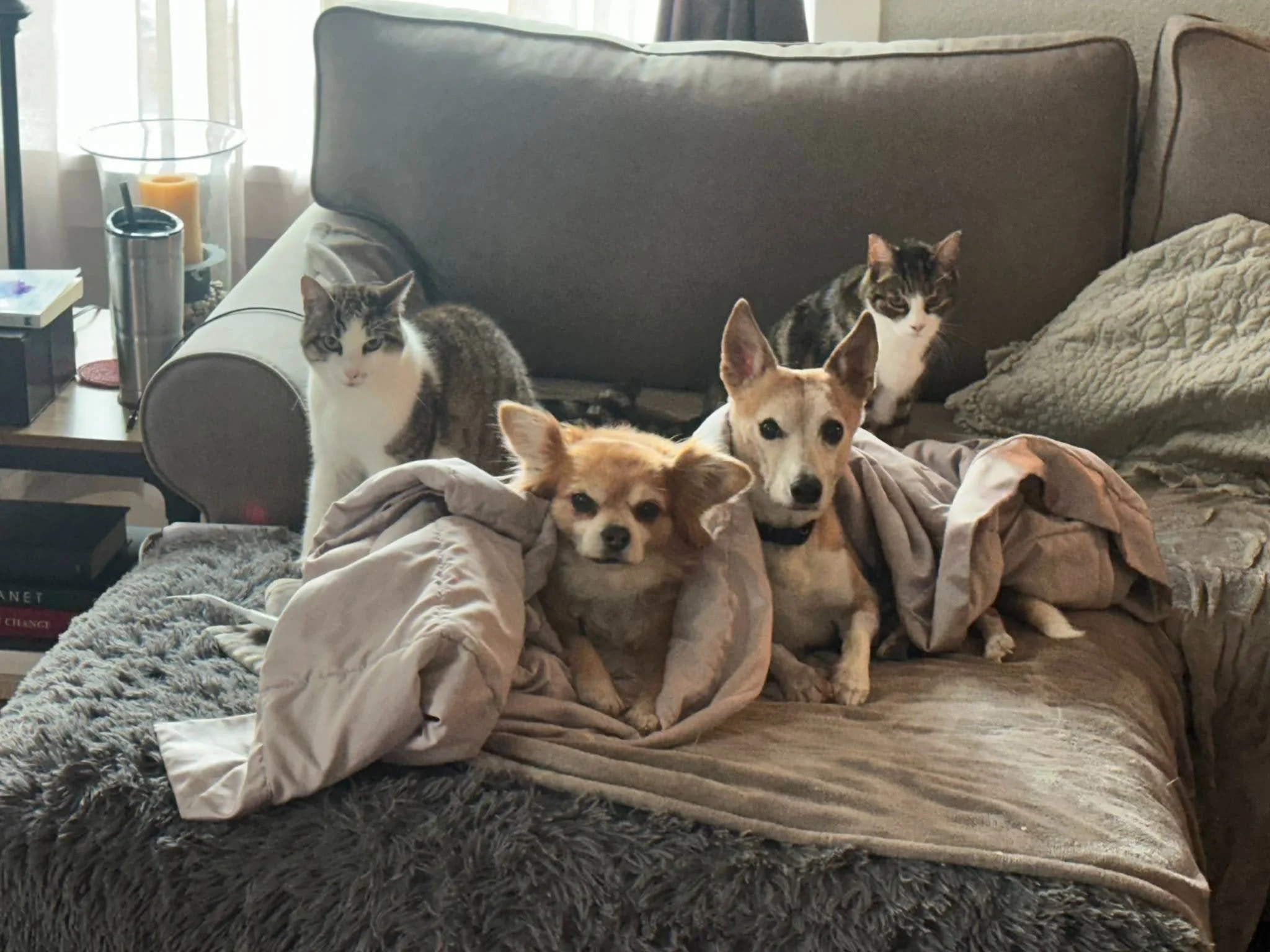
My body has demanded I slow down, and I have finally, almost, sometimes, gratefully listened. The silver lining is that from my warm spot, with my four animals piled on top of me, I have been learning. All audio. Nothing that requires my hands. It has been peaceful and purposeful. The kind of learning that is genuinely good for the soul.
A bright spot for my vanity and my health, my integrative doctor has been using low-dose GLP-1 for autoimmune inflammation, and they are finding it can genuinely help. So I get to be back at my fighting weight. The first twenty pounds was me and the rest was GLP.
When I was laid up with my lip for two weeks, I finally had time to watch The Pit Season 2. I binged the entire season and did some trauma work Mara style along the way. Mara style means falling face first into it, working through it, and moving it on through. However, don’t you worry, if we ever work together you get to pick the pace for yourself. I like fast and dirty! Season 2 was just as good as the first. For those of you in emergency medicine or first responders, and really all medical people, it is for us! Noah Wyle even said it was meant as a love letter to all of us. It shows how hard we all work and the toll it takes. For everyone else, please watch it because it shows what our ER providers and first responders face every single day, the impossible pace, the secondary trauma, the impossible decisions, the extraordinary human beings who show up anyway. It is worth every minute.
It is easy to think that the trauma of the job does not live inside us. As I watched The Pit, so many memories, emotions, and oh my god I remember that moments came flooding up from my emergency room and ambulance days. I think I removed at least ten pounds of trauma from younger Mara.
The biggest bright spot is, for sure, a double-edged sword. Keep reading.
The AI Moment
I want to tell you about the moment I finally understood what was happening to my mother. It both blew and broke my brain. Remember, I had advocated for her for two decades and we got nowhere. Sometimes the guilt still lives in my body. I was her bulldog and I failed her.
AI figured it out.
I put her entire medical history into AI. Every symptom, every year, every dismissal. It diagnosed her for the very first time. What she had been living with for decades finally had a name, a recognizable pattern, and a treatment pathway.
That moment was magic and I cried like a baby. She tried her whole life to get a diagnosis. It takes an average of 4.5 years to get an autoimmune diagnosis. She never did.
Adelman Gray strikes again.
I am still trying to get a diagnosis.
She left me breadcrumbs. Her symptoms, her history, the language her body was speaking for years. I carry a grief around the fact that I could not read them clearly enough while she was alive. That I could not save her from decades of unnecessary suffering. I am working to let that burden go, because the truth is that most medical providers, including me, have not been trained to pull all of these puzzle pieces together. To look underneath the iceberg. The AI did what no appointment had managed to do.
Then I looked at my own history, and everything made sense. She left me enough breadcrumbs to save myself. I am using every single one.
I bulldogged for her and now I am bulldogging for myself.
Watch out, Kaiser. Watch out, broken medical systems. The bulldog for eveyone else is finally fighting for herself.
The Fight
Four Rheumatologists. Many Requests. Zero Prescriptions.
Over the last sixteen months, I have seen four different Kaiser rheumatologists. Each time I came asking for them to hear my symptoms, my family history, and help me arrive at a diagnosis. Each time I was told I was not rheumatologic and sent home without any explanation for symptoms that were, by every definition, rheumatologic, including fatigue, joint pain, rashes, vascular changes, and more.
I was confused and dismissed every single time.
It was not until I started asking specifically for Plaquenil that I understood the depth of the wall I was up against. I have been told no. Every. Single. Time. Your labs are normal. This is not evidence based. This will not help or treat the symptoms you have.
They are categorically wrong.
I have done extensive research on Plaquenil and my likely diagnosis, which is either undifferentiated connective tissue disorder, mixed connective tissue disorder, or overlap syndrome. Either way, Plaquenil, if it works, is proven to decrease fatigue, joint pain, and many other symptoms by reducing overall inflammation in each of these conditions. Most importantly, there is evidence it may help slow progression to pulmonary hypertension.
That is the exact thing that killed my mother.
It is a relatively safe medication that has been around since the 1950s and typically takes about three months to work. It does carry one real risk, and that is the potential to affect the retinas and cause blindness.
I watched my dad live his last decade and a half blind. I am not minimizing that.
However, if it comes down to a choice between the pretty darn rare potential to lose vision like my father, or the very real threat of living in the body my mother inhabited for the last two decades of her life, I might actually choose vision loss.
The System
I filed a formal complaint with Kaiser over a month ago. Again, this is not about one particular provider. We cannot blame the providers if they are burned out working in a system that is not allowing access to care. This is a system issue and it is wrong.
I was assigned a case manager. I had called every week for four consecutive weeks. Not one callback. I gave the benefit of the doubt and called member services to ask for a new representative. Maybe he too is burned out, or out on disability, or so buried that he cannot keep up, because that is our new reality in medicine. I was told I would get a new representative. I did not hear from anyone.
I eventually got a letter. The head of rheumatology reviewed my case without examining me or talking to me. I do not qualify for an outside referral.
My primary care provider is a lovely human and a good doctor. She has been supportive and helpful to the best of her ability, while working in a system that often ties her hands, and she wrote a letter to Stanford. They will not see me without the actual referral that rheumatology refuses to provide. It is truly maddening.
I am filing a formal complaint with the California Department of Managed Health Care. If that does not move things, further steps will follow. 7 On Your Side, perhaps.
My primary care provider and I had a discussion about whether I should get out of the Kaiser system when open enrollment occurs at work. We agreed it would be a lot to start over, and I was left with a thought I said out loud.
Or I can just help fix this system.
She laughed, but she does not know Mara the Bulldog.
PSA Watch Out for Autoimmunity
Some of the triggers you can control, some you cannot.
Menopause
Autoimmune disease rates skyrocket during menopause. For my twin sister and me, both of us worsened significantly at the same time we entered that hormonal shift. Looking back at my mother's history, her symptoms also began escalating during menopause. This is not a coincidence. It is biology. The drop in estrogen affects immune regulation in ways we are only beginning to fully understand.
Roughly 78% of all autoimmune disease patients are female. When autoimmune diseases are grouped together as a single category, they rank among the leading causes of death in women under 65. The true burden is almost certainly higher than reported, because they are tracked individually rather than as a unified category the way heart disease and cancer are. That fragmentation hides the collective impact.
Only 1% of global healthcare research dollars goes to female-specific conditions outside of cancer. One percent. That is why my mother was dismissed for decades. That is why I am being dismissed now. That is why Melinda French Gates committed $100 million in 2026 to studying autoimmune disease, cardiovascular disease, and mental health in women specifically, because these are the areas with the highest burden and the least investment.
Deep down I always knew my mom had an autoimmune condition, and it became clearer over the years after talking to other family members that it ran in the family. My twin sister was diagnosed with psoriatic arthritis at thirty-five. In retrospect, that is when I started losing cartilage in my neck. I put that off as an overuse condition from years at a computer. It was likely the beginning of my own autoimmune journey.
You are not crazy. If your body is telling you something, listen to it. Keep showing up. Keep documenting. Keep asking questions. You are the expert on your own body, and you deserve a doctor who treats you that way. Do not stop until you find one.
Stress and Burnout
Chronic stress, the kind that is ongoing and relentless and out of your control, is one of the most well-documented triggers for autoimmune flares. When your nervous system is stuck in alarm mode for long enough, your immune system starts to dysregulate. Your body cannot tell the difference between a real threat and a Tuesday. Helpers often live in a chronic state of stress.
Relationships
Relationships that are not good for you are not good for your immune system. Chronic relational stress, the kind that keeps your nervous system in a low-grade alarm state, is immunosuppressive. If there are relationships in your life that consistently leave you feeling worse, more anxious, more depleted, your body is registering every one of those interactions. The body keeps score, as Dr. van der Kolk says.
I would hasten to bet that most of us helpers are shoulding all over ourselves in our relationships. We are the ones who often social work and help when our family and friends are in crisis. We often put everyone else first and ask ourselves to wait. The immune system keeps the score of all of it.
Please put down the ones that are not serving you. Even a little bit. Even for a little while. Your body will notice.
This is part of the magic of trauma work. You are automatically pulled toward what feels healthy, and some of the less healthy dynamics quietly fall away on their own.
I have had to create some distance from certain relationships that were not serving my nervous system, because I am changing. My nervous system is changing. I am learning what healthy communication actually feels like, and I am no longer willing to tolerate what I used to push through. That is part of the work.
Helpers
There is one more group that needs to hear this. Medical providers, first responders, teachers, social workers, caregivers, all the helpers. The research is increasingly clear that chronic caregiving stress, vicarious trauma, and the kind of relentless selfless output that helpers do, significantly elevates the risk of autoimmune conditions. We give and give until our immune systems lose track of what to fight.
That is a large part of why I am building Healing the Helpers. I have learned boundaries and I hope to fare better than my mother, who was a selfless nurse through and through.
If you are a helper, there is a good chance you have a helper wound too. It is the part of you that learned early that your needs come last, that showing up for others is safer than asking to be seen yourself. It is the part that keeps giving long after the tank is empty, because stopping feels selfish and rest feels earned only through exhaustion.
You are not broken. You are depleted. There is a difference, and it matters.
Here is the thing about being a helper that nobody talks about enough. We rarely get to put it down. Most of us are helping in all aspects of our lives, social-working our families, our friendships, every relationship we are in. We never get to put it down. We know too much. We’ve seen too much. We cannot unknow what we know. You cannot pretend you do not see what you see. Yes, sometimes that is exhausting beyond words.
The irony is brutal. My clinical knowledge is the thing that has saved my friends, family and animals over and over again. It has helped me diagnose family members and friends who have been underdiagnosed, misdiagnosed, and incorrectly treated. It is also the thing that means I can never just hand it off and trust someone else to catch it. I carry it every single time.
I know there are helpers out there nodding their heads at this one.
Dairy
Dairy. I have to talk about dairy. Specifically cheese, because I miss it the way you miss a person. Real cheese. Not the sad alternatives. Real, aged, creamy, complicated smelly cheese.
Here is the thing about dairy and autoimmunity. Casein, the protein in cow's milk, is a known inflammatory trigger for many people with autoimmune conditions. It can increase gut permeability, which is exactly what you do not want when your immune system is already confused about what to attack. So I gave it up. Mostly. Reluctantly. With a lot of grief.
Luckily, I spent years going to parties in Napa where the cheese platters were the size of a small car. Manchego, aged gouda, triple cream brie, things I cannot even name but definitely ate. Those days are behind me now and I want you to know I am not okay about it. I am healing. But I am not okay about it.
If you have an autoimmune condition and you have not looked at your dairy intake yet, it is worth a conversation with your provider. It will not fix everything. It did not fix everything for me. But it is one less thing pouring fuel on the fire.
Worth it. Mostly. Ask me again when someone brings out a really good aged sharp cheddar.
Alcohol
After a brutal workday, a glass of wine to decompress feels like a lifeline. To all you helpers out there, the numbers of alcoholism and binge drinking in helping professions are skyrocketing. Since the pandemic I have diagnosed five patients in their forties with cirrhosis. I have watched people lose family members young. So here is the gentle nudge. This is coming from someone who used to drink two glasses of wine after a hard clinic day.
The previous US guidelines suggested no more than one drink per day for women and two for men. The updated 2025 guidelines removed those specific numbers and now simply say to consume less alcohol for better health. Here are the numbers that still matter clinically, because it turns out most of us have been doing our own math.
One standard drink is 5 ounces of wine, 12 ounces of regular beer, or 1.5 ounces of spirits. Heavy drinking is more than three drinks on any single day or more than seven drinks per week for women. For men it is more than four drinks on any single day or more than fourteen drinks per week. Binge drinking is four or more drinks within about two hours for women, and five or more for men. Both thresholds are lower than most people realize. A glass of wine is one glass, not half the bottle. I know. I know. It is easy to pour that much. That is exactly the problem.
Alcohol is poison. Fun poison, in small amounts, judiciously. For a body already fighting itself, it adds fuel. For a nervous system that is chronically stressed, using it to cope is worth examining, gently, without judgment, because I have been there.
Women now drink at the same rate as men, and alcohol-related deaths rose 35% in women between 2016 and 2021. Women who drink even one drink per day have a 5 to 9% higher chance of developing breast cancer compared with women who do not drink at all. And for those of us whose immune systems are already misfiring, adding a known carcinogen and inflammatory agent to the mix is worth a hard look. Not judgment. Just information.
Psilocybin, for what it is worth, has now been studied in multiple clinical trials for alcohol use disorder with genuinely promising results. A 2025 phase 2 randomized controlled trial found that a single dose combined with brief psychotherapy significantly reduced relapse rates. Stay tuned the science is moving fast.
THIS IS NOT MEDICAL ADVICE. Please work with your own provider on any health decisions.
Wellness Check, What Is Your Burnout Score?
I have been doing an informal pulse check on helpers in my community for the better part of six months. Physicians, nurses, PAs, veterinarians, teachers, firefighters, social workers, hospice workers, 911 dispatchers, pharmacy staff, and more. The answer when I ask where they are on the burnout scale? Eight, or higher. Several have nearly started crying just being asked.
The EKG technician at Kaiser told me she was a ten. She almost immediately started tearing up. "They just keep pushing us to go faster and faster."
At a Kaiser health fair on a Tuesday, I looked around at the medical staff. Four out of ten had on wrist splints. Everyone looked exhausted. Not just tired. Truly depleted.
It seems like a large part of the reason I am not getting help is because my providers are too burned out to educate themselves further. Too burned out to be open. Too burned out to see past their own patterns, because they have not done their own healing work. They are not well, physically, intellectually, emotionally, or spiritually. When they are not well, the person across from them does not get what they need.
At my own clinic I sit on the wellness committee. When we ask our people what would help most, the answer is always the same, more time with patients, to please slow down the chaotic pace. We cannot have it. That is not our management's choice, they would love to give us thirty minutes. That is the payer structure. That is the healthcare system itself.
Imagine the Titanic. You are on it. Most people on the deck are starting to notice the iceberg. The engine room, however, is keeping the ship going. The helpers are the engine room.
My dog Macie recently had a severe colitis episode, the kind that takes a healthy dog out for days. I watched her push through it, still wanting to do her job, still showing up. That is us. That is the entire workforce of helpers right now. We are the engine room. We are still running. The ship is taking on water. We keep running.
The average burnout score I am hearing from helpers is not a five. It is an eight. That is not a workforce that is tired. That is a workforce that is going down with the ship and has not been told the ship is sinking.
👉 Take the free burnout quiz here Burnout Quiz
Your nervous system has been keeping score. It is time to check in with it.
Helpers in Crisis
Let me tell you about my cardiologist. He was calm, competent, the kind of steady energy that genuinely balanced mine that day. As I am now known to do with all the helpers I encounter, I handed him one of my burnout quizzes. We were walking out and I looked at him and said, if I had to guess, I would put you at a five or below. You seem like you are doing okay today.
He kept walking, looked back over his shoulder and said are you kidding? I am terrified on the daily.
We made eye contact and held it for just a second. He smiled, I nodded and we walked away.
That stopped me cold. Because this man had all the markers of okay. Regulated. Calm. Competent. The kind of provider that makes everyone around him feel like everything is going to be okay and he was terrified on the daily.
That is the thing about helpers. The ones who seem most okay are sometimes the furthest from it. They are just better at the mask.
So that means that even the helpers who look okay, whose energy reads as balanced, who seem like they have it together, may not be okay. I did not understand that until I started doing this work and doing the asking. The ones who look the most together are often the ones whose coping mechanism is to work, to work and to work some more. They hide behind their competence. I did that too, until my body said no more.
Pause and think about that.
That is your veterinarians. Your teachers. Your hospice workers. Your first responders. Your nurses. Your pharmacists. Your social workers. All of the helpers. They look okay. Their nervous systems may read as calm to most people. They may not be okay.
A word on veterinarians. Veterinarians have suicide rates double those of other medical professionals and four times that of the general population. I have talked to my veterinarian friends, and many of them have to euthanize at least one animal a day as part of their regular work. In human medicine, we do not have to do that. We do not even have to deliver a cancer diagnosis every single day. The pace is the same and the pace is also the problem. Veterinarians move on just as fast as we do in our medical buildings, fast and furious and on to the next, with no time to feel the feelings, let alone let them out. We have all been so busy running from room to room that we have been scheduling our grief for later for years.
Another example of burnout possibly affecting patient outcomes.
My seventeen-year-old cat Max, who is a very cute tripod, was recently diagnosed with multiple myeloma, a type of cancer that affects the blood, the bones, and the kidneys. It broke my heart. I did extensive research, figured out what was needed, and scheduled an appointment with oncology to talk about prognosis and palliative care. The soonest they could see him was ten days away. He started showing symptoms that needed acute treatment, so I called ahead to the emergency vet, explained I was a medical provider, told them exactly which labs I needed to try and get to ahead of the problems and why, and what medication I was asking for. I was told they could provide all of that.
After the typical hours of waiting it was our turn. The ER vet was, from what I could tell, a highly competent clinician. However, she could not absorb what I was saying.. She could not hear past the request to the reasoning behind it. She seemed burned out. I ended up again having to fight for something I had already done the homework on.
I eventually got what Max needed and it has given him several months of quality time. He is slowly fading, but I am so grateful for every single minute.
Then I thought, this is exactly what is happening to me everywhere. I know what I need. I have done the research. I come prepared. The providers across from me, in what I will admit are often more complicated requests than average, cannot hear past the ask to the very sound reasoning behind it, because they are too rushed, too depleted, and often coming from a place of ego.
Just as I was finishing this post, I spent six hours at the animal ER with my little girl Macie for severe belly pain. I was quoted two hours when I left the house early that morning. 6 hours in we were walking out with an ultrasound done and $1,500 later. As we waited, I sat there and watched every single thing I have been writing about play out in front of me. I could see the burned-out people. I could see the ones who were masking, holding it together on the outside in a way that had nothing to do with how they actually were. I handed out some cards. When the bill came, I had guessed it to within fifty dollars. This is not my first rodeo.
So please, all of you, veterinarians and medical people and helpers of every kind, take good care of yourselves. Take a look at the handouts I have created. Find ways to build wellness into your days in small increments. Your nervous system needs it. The people and animals depending on you need it. You deserve it.
We do not go into helper industries to do harm. Nobody chooses nursing or teaching or firefighting or social work to make someone's life worse. So if harm is happening, it is because of the burnout and the systems that do not support the helpers. If we want to fix the harm, we have to fix the burnout. To fix the burnout, we have to fix the systems.
I also want to say something specific about people in the trades. After taking a six-hour suicide intervention course, I learned that construction workers and people in trades-related work have one of the highest suicide rates of any occupational group, higher than many of the other helpers on this list. They carry physical injury, financial instability, and a workplace culture that treats asking for help as weakness.
In honor of my brother, who works in the trades, I have added people in the trades to the helper category I am building towards working with. They are the best kind of helpers, without them who is going to fix your leaky sink?
Gratefulness
Despite it all, I remain so incredibly grateful. Not for the illness or the dismissals or the fighting, but for the ability, the luxury, to have been able to do this work for myself so that the next three decades of my life are healthier, so that I can heal and help heal others in a more profound way. The luxury to do this work so that despite all the external chaos I can sometimes, more often than before, at least, return to internal calm.
I am grateful that my parents left me a bit of moolah and that I chose to use it for the schooling that has allowed me to birth Healing the Helpers, which has given me a brand new purpose in life.
I am incredibly grateful for this new work I will get to do and the people I will get to help. As I have been moving toward this new venture, I have been creating handouts because I want everybody to have the tools that have helped me. The first I will share with you is a gratitude practice guide. The second is a vagus nerve reset guide. My personal favorite is the eye cover technique. Try it. It regulates me in 2.2 seconds. A big yawn follows, and I am ready to go fight the next tiger.
I am so incredibly grateful for all my personal healers, practitioners, and medicine workers who have helped me get here. I will share more about them and their work down the road. One shout out now though, my badass EMDR therapist Vanessa helped me understand something I needed to hear, and I want to share it with all of you.
There is a difference between capable and comfortable.
She would look at me in session and say, were you capable of that? I would say yes. She would say, but were you comfortable? I would have to sit with the fact that the answer was no. I was never comfortable. I just kept doing it anyway.
Ignoring that gap, for years, was part of the reason I am autoimmune. I always pushed too hard. I am learning to stop.
How many of us have just pushed through? Get up, pound some coffee, take a Tylenol, get on with the day. For money, for work, for family. Many of us have to. But if you do not stop and pay attention to your physical body, slow your nervous system down, stretch, get into yourself, your body will eventually find a way to make you stop.
Mine did. Loudly.
Nothing makes you a better provider than being a patient. When you are being told to wait and come back in a year, that your symptoms do not matter, that nothing is wrong with you, when you know from your soul to your toes to the top of your head that that is categorically wrong, you know from that moment that you never want to make another person feel that way. Luckily I come from a background where my first medical director taught me, you do it right the first time and every time. My motto is to do no harm. If I do not know something, I will not let my ego get in the way. I have a conversation and I go find the answer. No matter how depleted I might feel on any given day, the person in front of me is important. Whether you are a helper or not, the people in front of you and how you treat them is the whole point.
So on that note, please look out for yourselves. If you are not feeling like you are getting the care you need, ask for a second opinion, no matter what you are being seen for.
We all carry an inner healing wisdom. An innate, body-based ability to know what is right for us, if we slow down long enough to hear it. When faced with that gut feeling that something is wrong, take a really big deep breath and go in the direction that feels right for your body.
To my fellow providers and helpers out there, when dealing with clients or patients, take that same big deep breath and ask yourself, what is actually right here for this person right in front of me?
If we can do that for each other, and if our healthcare and all helper systems can do that for us, then maybe those systems will not collapse around us. I genuinely believe it is that simple, and that hard. The four agreements have been a compass for me. Be impeccable with your word. Do not take anything personally. Do not make assumptions. Always do your best. If more of us could live from that place, even some of the time, things would be different.
These tools that I have shared today, and the many others I have learned along the way, that I will be sharing, are what I wish I would have had in my toolkit long, long ago. I am finding that to be okay, all we can do is grow from where we are. If you need help with any of this, I am here for you.
On the harder days I put on my weight belt to do my morning chores, bone-building for the osteoporosis, which like my mother I have way too young, and I start with Eye of the Tiger. My animals know exactly what it means when that comes on. We all get our butts up and moving.
When I start to doubt what I am doing, I play a song that brings me back. My Next Thirty Years by Tim McGraw. I remind myself that I am building something sustainable. Something that will still be meaningful in thirty years. Something I can continue to do as I get older.
I am almost done dealing with the business building and the three neverending Ls, lawyers, liability, and LLCs. I will one day soon be doing this very profound healing work alongside my clinical work. Both and all. That is the next thirty years and I am ready for the challenge.
The world is hard right now, and it is hard for everybody. If you are going through hard things, keep your eyes out for your bright spots and your warm spots too. There are going to be cold spots. That is part of life. Try to learn from the cool spots. A very wise person once said that life is all about pain, uncertainty, and constant work, and that the only way through is acceptance. That wise person is Dr. Phil Stutz, whose therapeutic framework was brought to a whole new audience in the Netflix documentary Stutz, directed by Jonah Hill. If you have not seen it, it is worth every minute.
My outside physical parts are still a mess, but my inside soul parts are finally, almost, mostly okay. Ask me tomorrow and I might have a different answer. Getting to okay more often is the goal. Progress is progress.
A balanced nervous system is all that matters. This is what I wish for all of you.
Mara
Disclaimer
This post is for personal sharing and informational purposes only. It is not medical advice and should not be used to diagnose or treat any condition. Please work with your own qualified healthcare provider.
Handouts
May 22, 2026
By Mara Adelman